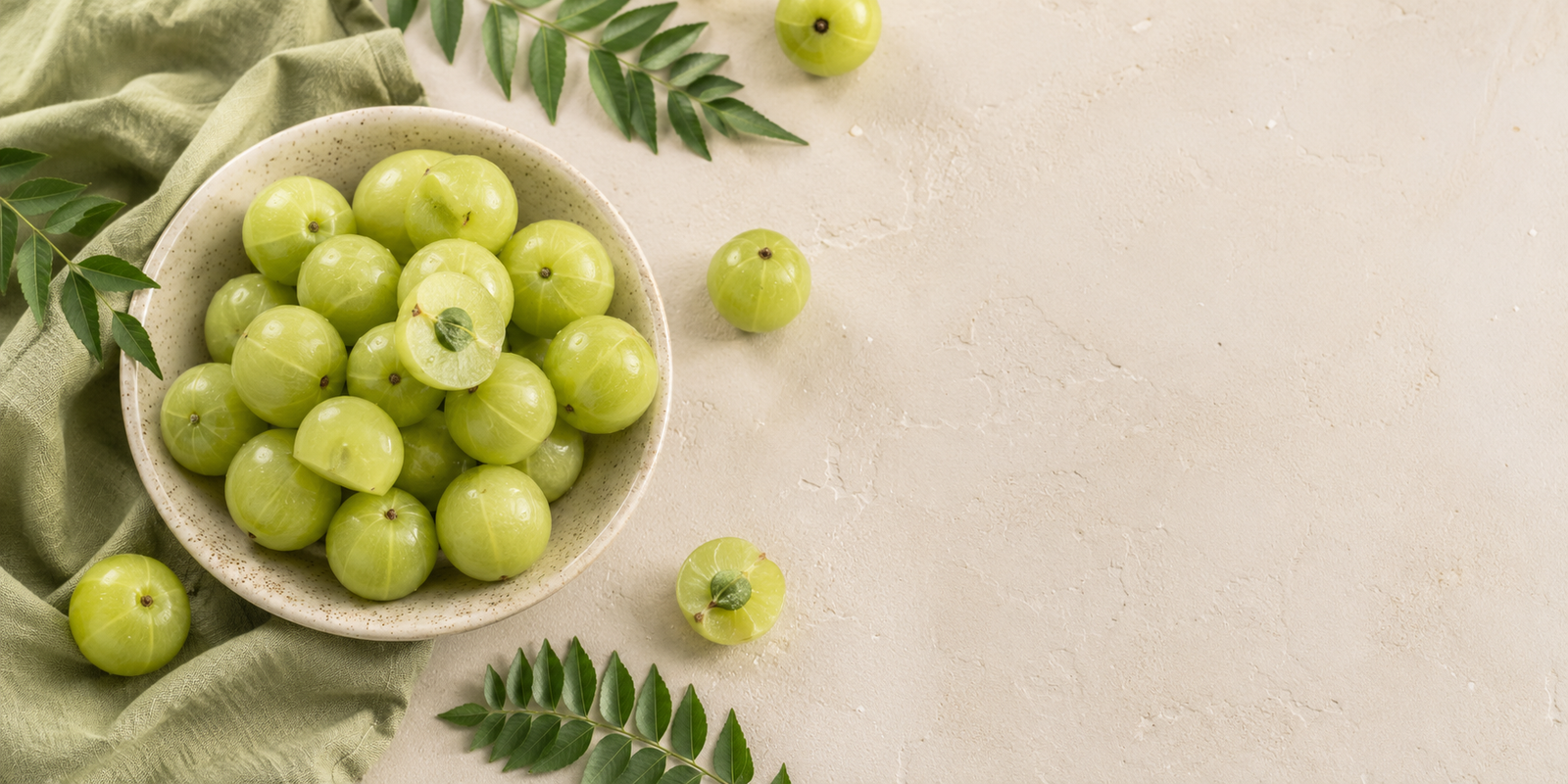
What's actually in amla
Amla's headline number is its vitamin C content — fresh amla typically carries somewhere between 470 and 700 mg per 100 grams, which works out to roughly 15-20 times more than an orange of the same weight. Beyond that, it brings vitamin A, iron, calcium, potassium, and a dense mix of polyphenols and tannins that give it most of its antioxidant power. It's also low in calories and carries a meaningful amount of fibre for something so small.
One important note: amla's vitamin C holds up better in fresh fruit, juice, or water infusions than in most dried powders or capsules, since a lot of commercial processing strips out much of what made it valuable in the first place.
Vitamin C and immunity
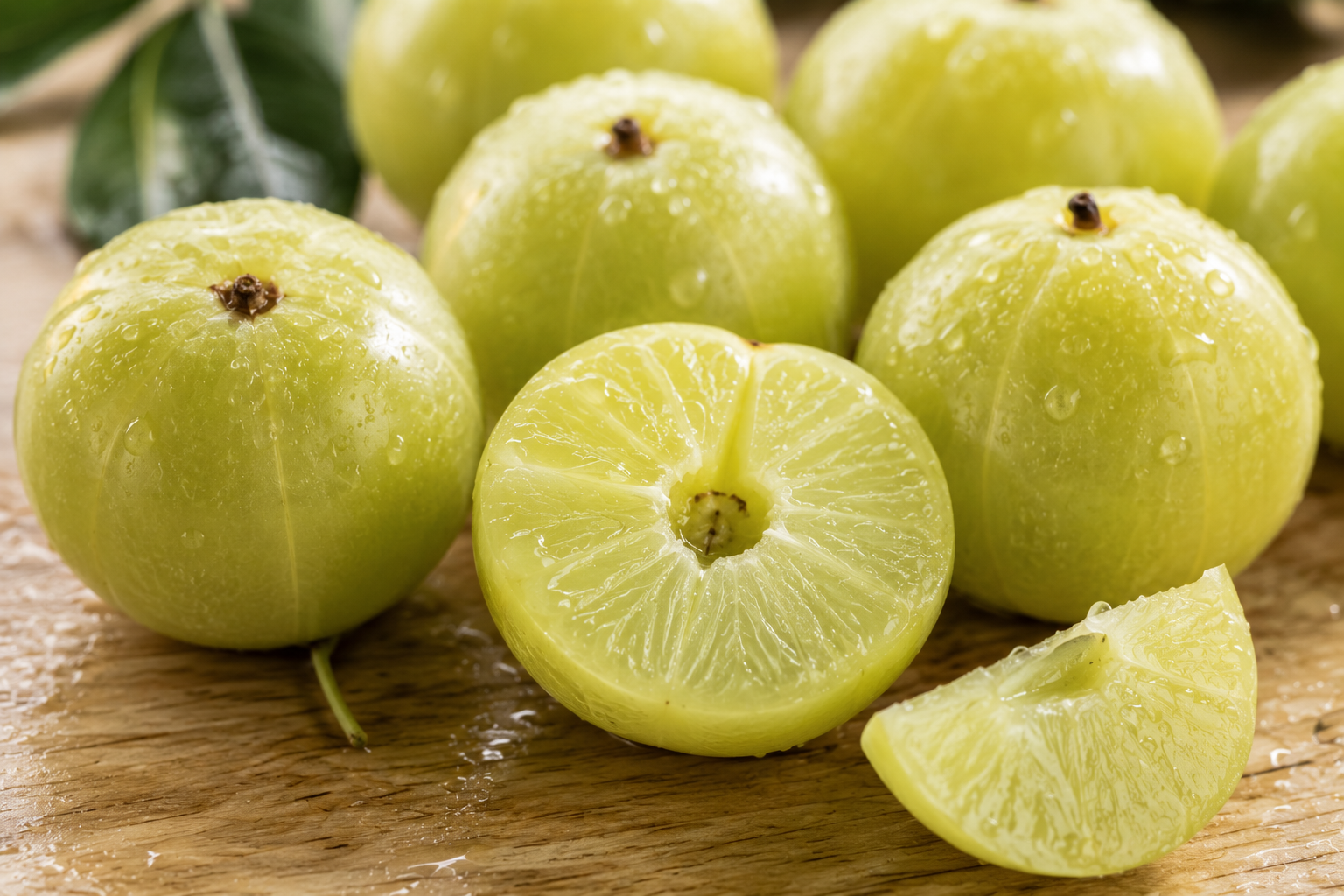
This is amla's strongest, best-documented benefit. Vitamin C supports the function of white blood cells, helps the body build antibodies, and acts as a powerful antioxidant that protects cells from everyday oxidative stress. Because amla delivers so much of it in a single small fruit, a daily glass of amla water or juice is a genuinely efficient way to support the immune system, particularly through cold and flu season.
"One amla can carry more vitamin C than several oranges — in a fraction of the size."
Digestion and metabolism
Amla's fibre content supports smoother digestion and more regular bowel movements, while its antioxidants help ease everyday digestive inflammation. In Ayurveda, amla has long been used to support the liver and the body's natural detoxification processes. Some research also points to amla helping regulate blood sugar by improving insulin sensitivity, which indirectly supports a healthier metabolism over time.
Why this matters day-to-day
- A natural, low-calorie way to top up vitamin C daily
- Supports smoother, more regular digestion
- A traditional pick for gentle, ongoing detox support rather than a quick fix
Hair and skin
Amla is one of the most common ingredients in Ayurvedic hair oils and treatments, and there's a real mechanism behind that reputation: its vitamin C and iron content support stronger hair follicles, while its antioxidants help calm scalp inflammation that can otherwise interfere with growth. On skin, amla's vitamin C plays a role in collagen production, and its antioxidants help defend against the oxidative damage linked to fine lines and dullness over time. It's worth noting that most of this evidence comes from traditional use and smaller studies rather than large-scale clinical trials, so it's best understood as a supportive habit rather than a guaranteed fix.
Heart health and blood sugar
Amla's antioxidant load has been studied for its role in supporting healthy cholesterol levels and blood circulation, both of which matter for long-term heart health. Alongside this, several studies point to amla helping moderate blood sugar spikes after meals, likely through improved insulin sensitivity. As with most of amla's benefits, this works best as part of a broader healthy diet rather than a stand-alone fix for any specific condition.
Why Ayurveda has used it for centuries
Amla is one of the three fruits in Triphala, a classic Ayurvedic formulation used for digestion and detoxification, and it's also the central ingredient in Chyawanprash, a traditional immunity tonic taken across generations in Indian households. Ayurveda considers amla a rejuvenating, adaptogen-like fruit — something that helps the body build resilience over time rather than delivering an instant effect. Modern nutrition research is now catching up to explain many of these traditional uses through amla's vitamin C, polyphenol and mineral content.
How to actually eat more of it
- Fresh or as juice — the most efficient way to get its vitamin C intact
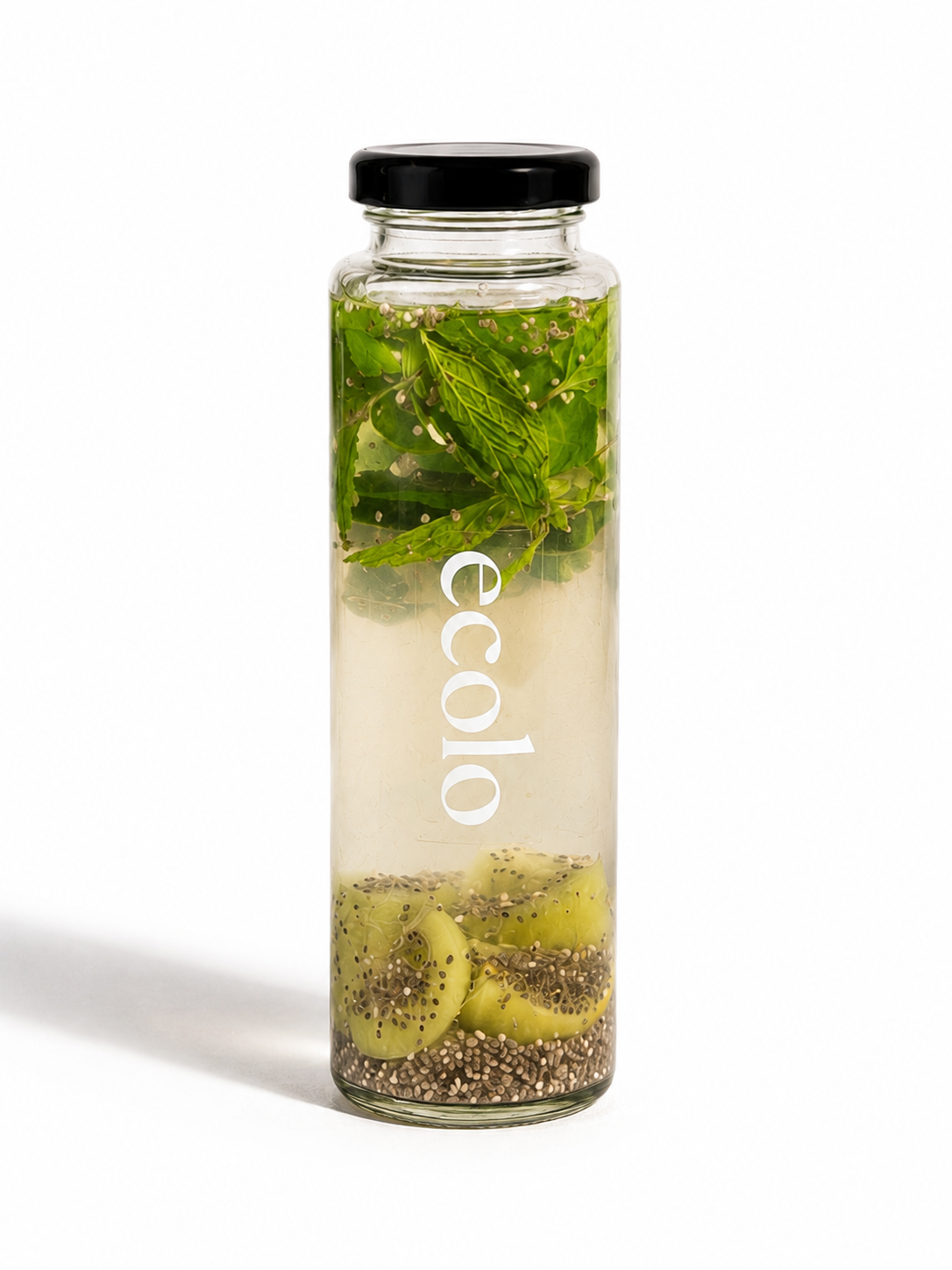
- Infused in water — a sharp, tangy way to start the day without added sugar
- Dried or as murabba — a traditional preserved form, though usually with added sugar
- Blended into a smoothie or shot — its tartness pairs well with something naturally sweet to balance it out
This is exactly why amla is one of the core ingredients across our immunity-focused blends at Ecolo — it brings real, concentrated vitamin C and antioxidant value, balanced by sweeter fruits so the sharpness never overwhelms the drink.
Frequently asked questions
How much vitamin C does amla actually have?
Fresh amla typically carries somewhere around 470-700 mg of vitamin C per 100 grams, roughly 15-20 times more than an orange of the same weight, making it one of the richest natural sources of vitamin C available.
Does amla actually help with hair growth?
Amla's vitamin C, antioxidants and mild anti-inflammatory compounds are believed to support stronger hair follicles and reduce scalp inflammation, though most of this evidence comes from traditional Ayurvedic use and smaller studies rather than large clinical trials.
Is fresh amla juice better than amla supplements?
Generally yes for vitamin C - many commercial amla supplements contain far less vitamin C than fresh or lightly processed amla, so fresh fruit, juice, or water infusions typically deliver more of the actual nutrient.
This article is for general information and isn't medical advice. If you have a specific health condition or take medication, check with a doctor or dietitian before making major changes to your diet.