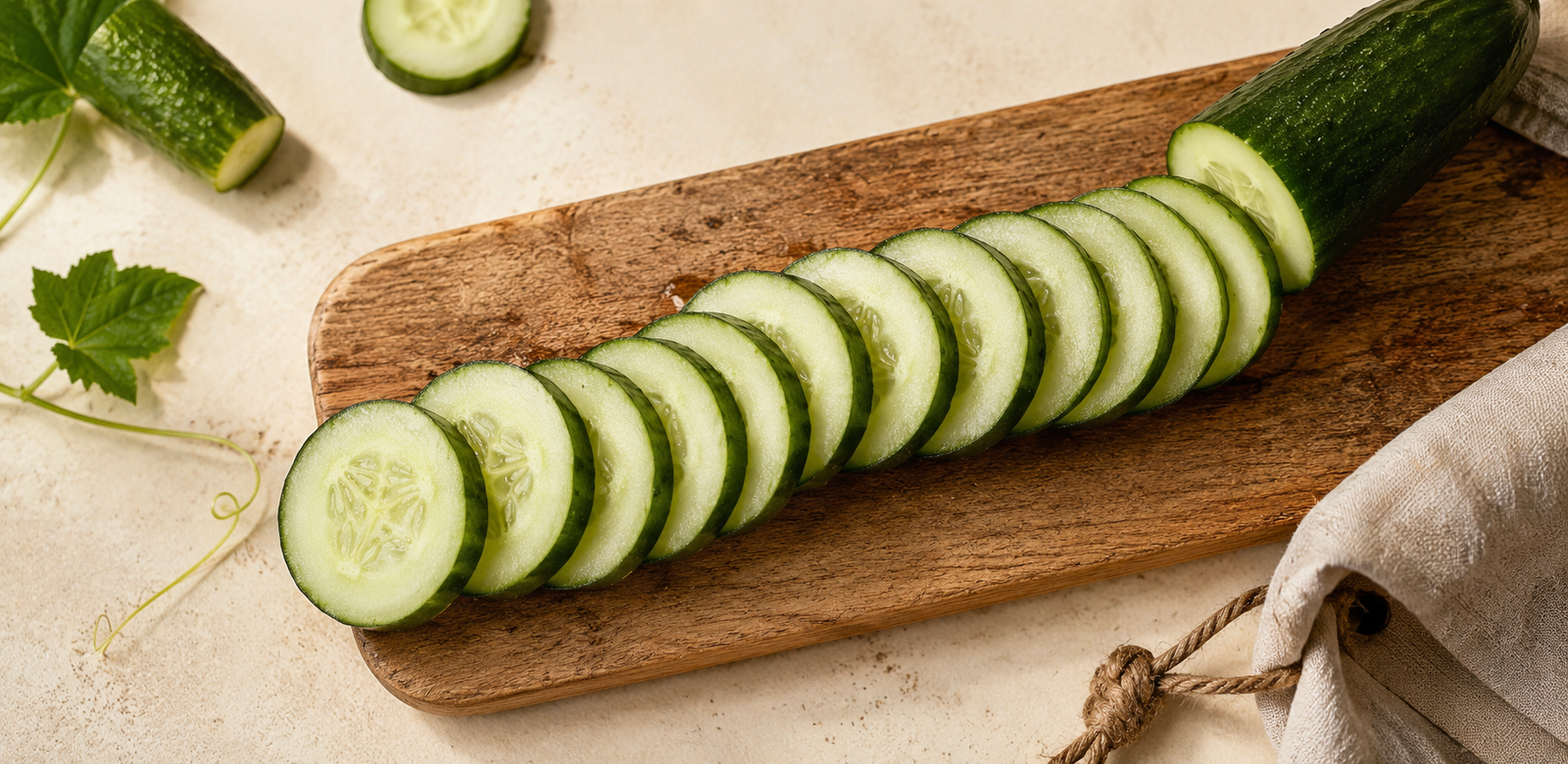
What's actually in a cucumber
A cucumber is roughly 95-96% water, which already tells you most of its story. But the remaining few percent is doing real work: vitamin K, vitamin C, potassium, magnesium, and a meaningful amount of soluble fibre, most of it concentrated in and just beneath the skin.
It's technically a fruit, botanically speaking, even though every kitchen in the world treats it like a vegetable. That mild, almost neutral flavour is exactly why it works as a base for so many things — including a detox drink that needs to carry other, stronger flavours like mint or lemon without fighting them.
Hydration, done properly
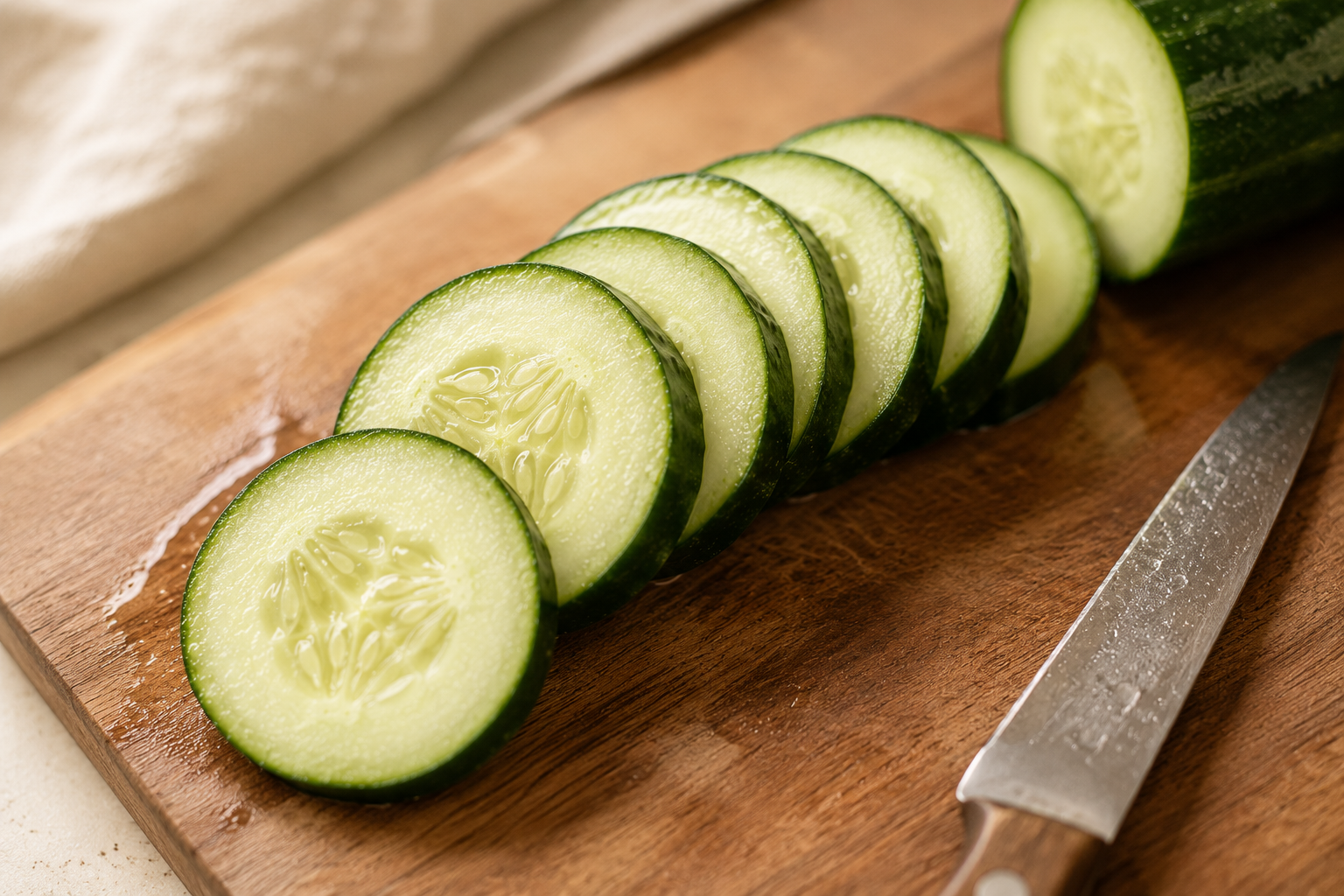
Water alone hydrates you. Cucumber hydrates you and replenishes what you lose along with that water — mainly potassium, an electrolyte your body needs to keep fluid balance steady between cells. That's a big part of why cucumber water and cucumber-based drinks are a staple after workouts or in Delhi's summer heat, when plain water alone doesn't always cut it.
"Cucumber delivers fluid alongside the electrolytes that help your body actually hold on to it."
Digestion and gut health
Cucumber's fibre is mostly pectin, a soluble fibre that does two things at once: it feeds the beneficial bacteria living in your gut, and it helps keep bowel movements regular by improving stool consistency. If you eat the skin (washed, unwaxed where possible), you get meaningfully more of this than if you peel it.
Why this matters day-to-day
- Less bloating after heavy or salty meals
- More consistent digestion, especially when paired with mint
- A gentle, low-effort way to add fibre without adding bulk or calories
Skin and inflammation
Cucumber's reputation for cooling puffy eyes isn't just a spa cliché — it comes from a real combination of high water content, silica, and antioxidant compounds that support skin hydration and calm mild inflammation. Applied topically, cold cucumber slices constrict blood vessels slightly, which is why they take down puffiness. Eaten regularly, the same hydration and antioxidant load supports skin from the inside.
Weight management
Cucumber's low energy density (very few calories for a lot of volume) makes it genuinely useful if you're trying to eat less without feeling like you're eating less. It bulks up a meal, adds crunch and water content that helps with satiety, and rarely gets in the way of a calorie target the way denser foods do.
Antioxidants and long-term health
Beyond the basics, cucumber contains plant compounds called flavonoids (including apigenin and luteolin) and cucurbitacins, which researchers have studied for their role in fighting oxidative stress — the kind of cellular damage linked to aging and chronic disease over time. These compounds are also being studied for their potential role in supporting healthy blood pressure and reducing general inflammation, though this is an active area of ongoing research rather than settled science.
How to actually eat more of it
- Raw and unpeeled — the simplest way to get the most fibre and nutrients
- Infused in water — with mint, lemon, or ginger for flavour without added sugar
- Blended into a smoothie or drink — cucumber's neutral flavour means it never overpowers the other ingredients
- In salads with a light dressing — pairs well with lemon, olive oil, or yoghurt-based dressings
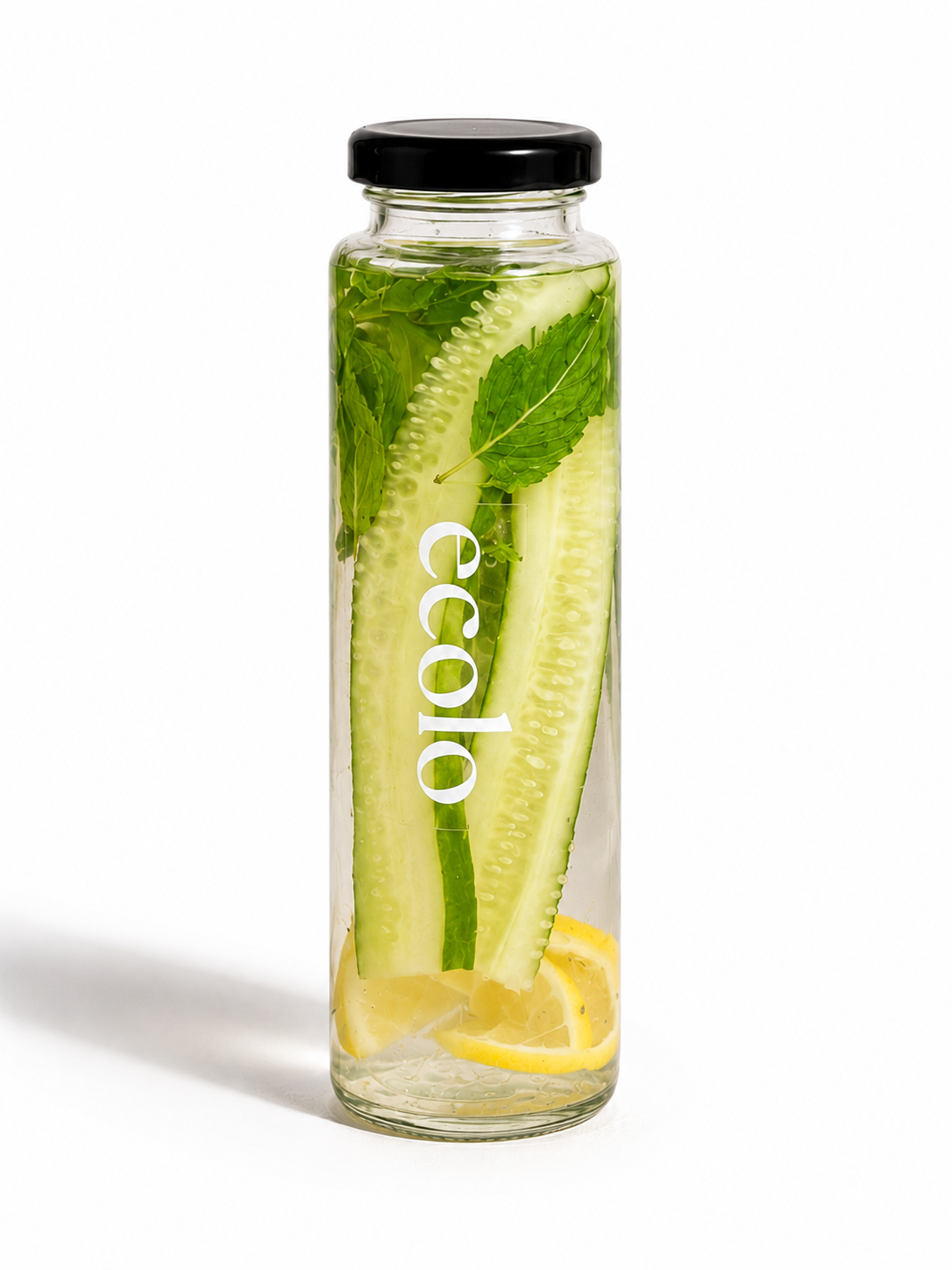
This is exactly why cucumber is the base of our lighter blends at Ecolo — it does the quiet work of hydration and nutrition while letting mint, lemon, or pineapple carry the flavour.
Frequently asked questions
Is it better to eat cucumber with the skin on?
Yes. Most of the fibre and a good share of the vitamin content sits in and just under the skin, so eating it unpeeled (washed well) gets you more nutrition per bite.
Can cucumber help with hydration better than water alone?
Cucumber is about 95-96% water, but it also carries natural electrolytes like potassium, which can support fluid balance in the body better than water alone during heat or physical activity.
How much cucumber should I eat in a day?
There's no strict upper limit for most people, since cucumber is low in calories and gentle on digestion. A cup of sliced cucumber a day is a reasonable, sustainable amount for most diets.
This article is for general information and isn't medical advice. If you have a specific health condition or take medication, check with a doctor or dietitian before making major changes to your diet.