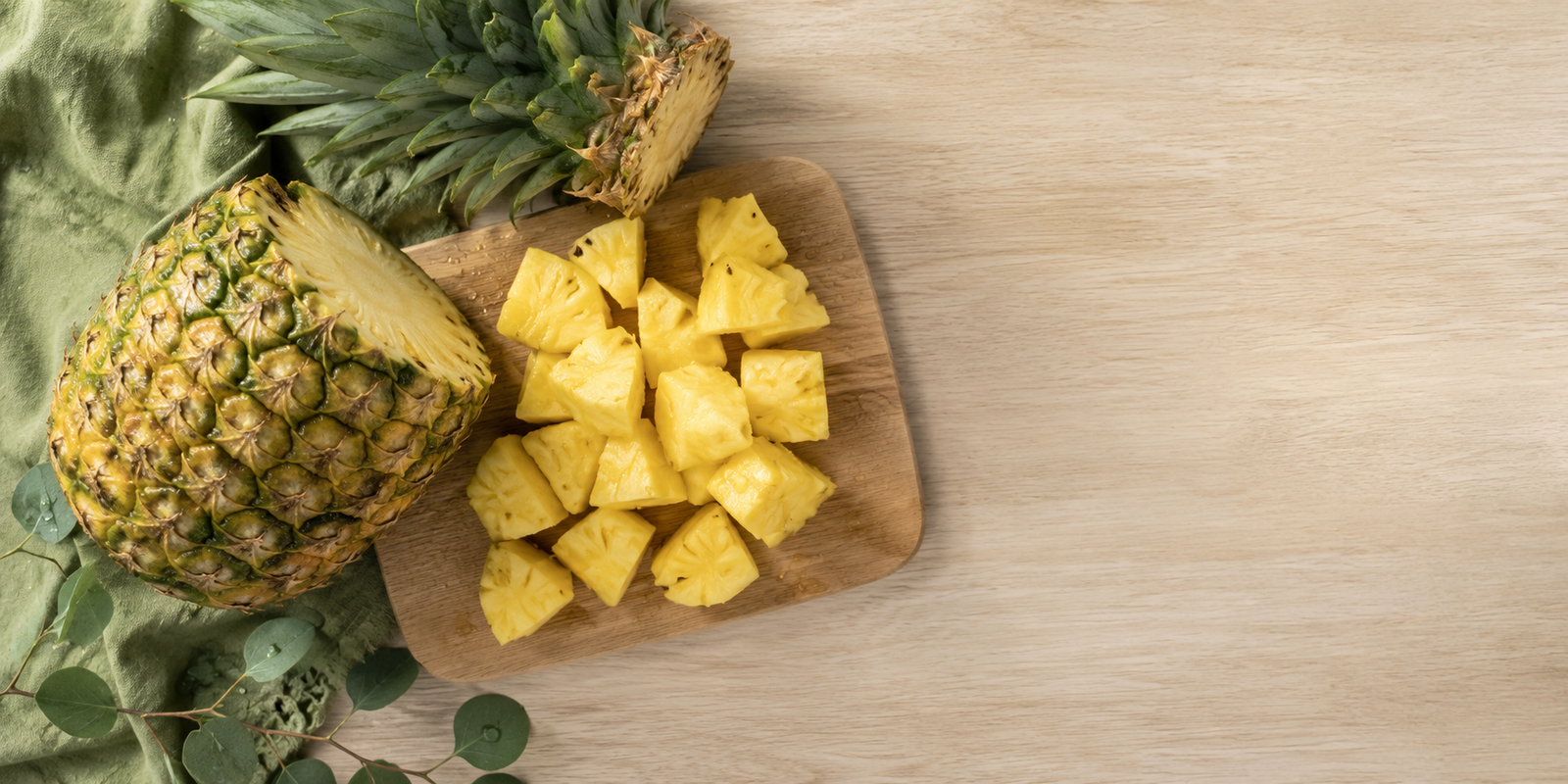
What's actually in a pineapple
Pineapple is genuinely one of the better fruits for vitamin C — a single serving can cover a large share of what an adult needs in a day. Alongside that, it carries manganese, small amounts of copper and B vitamins, a reasonable dose of fibre, and a handful of antioxidant plant compounds. But the ingredient that sets pineapple apart from almost every other fruit is bromelain, a mix of enzymes concentrated in the stem and running through the flesh.
Fresh pineapple is where all of this lives. Heat processing used for canned pineapple and most bottled juice breaks bromelain down, so the fresh fruit (or a lightly processed juice or blend) is the version that actually delivers on the enzyme side of things.
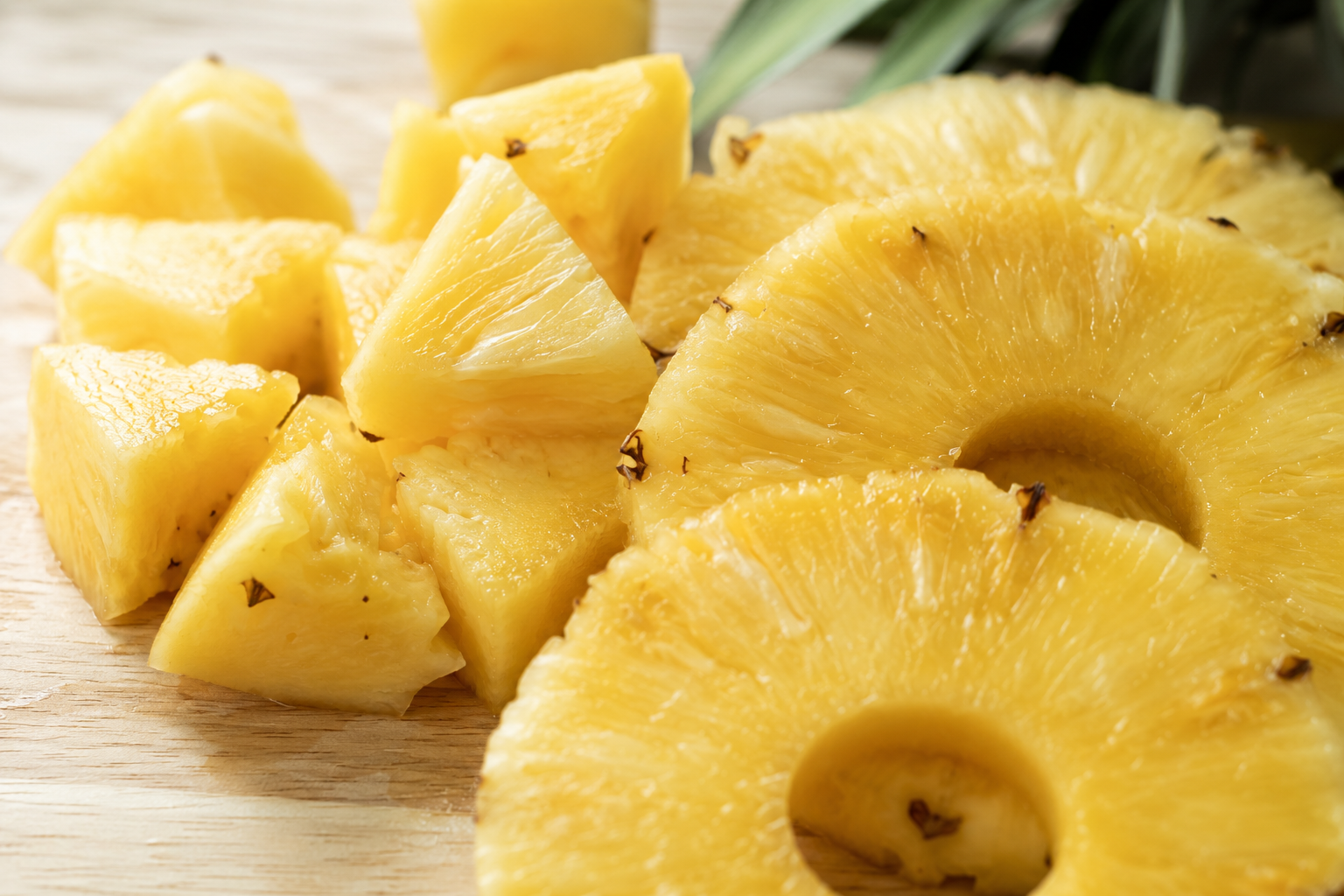
Bromelain: the enzyme that does the real work
Bromelain is a group of protein-digesting enzymes that indigenous communities across Central and South America used medicinally long before it was ever studied in a lab. It's strong enough that it's genuinely used as a meat tenderiser in cooking — pineapple marinades work because bromelain physically breaks down protein structure. Inside the body, that same action helps break dietary protein into smaller pieces the small intestine can absorb more easily.
"Pineapple isn't just sweet — it's one of the few fruits that helps do the digesting for you."
Digestion and gut health
Bromelain's protein-breaking action, combined with pineapple's natural fibre, makes it a genuinely useful addition after a protein-heavy or rich meal. The fibre helps keep food moving through the digestive tract at a steady pace, which reduces the chance of undigested food fermenting and causing gas or bloating. This is part of why pineapple has stayed a traditional after-meal food in so many tropical cuisines.
Why this matters day-to-day
- Easier digestion after meat, dairy or protein-heavy meals
- Less bloating when fibre keeps digestion moving steadily
- A naturally sweet way to round off a meal without refined sugar
Inflammation and recovery
Bromelain has a genuine, researched anti-inflammatory effect, which is why it's sold separately as a supplement for swelling, sports injuries and post-surgical recovery. The same enzyme that helps digest protein also appears to ease minor swelling and support faster healing of bruises, which is why athletes and physiotherapists have used pineapple and bromelain extracts for recovery for decades. Some early research also points to a possible role in easing joint discomfort, though this is still an active area of study rather than settled fact.
Vitamin C and immunity
Pineapple's vitamin C content is genuinely high for a fruit, and vitamin C plays a well-established role in immune function, wound healing and iron absorption from other foods. Pairing pineapple with iron-rich foods — leafy greens, lentils, seeds — is a simple, natural way to help the body absorb more of that iron than it would on its own.
Skin and antioxidants
Beyond vitamin C's role in collagen production, pineapple carries flavonoid antioxidants that help the body manage everyday oxidative stress — the kind of cellular wear linked to visible ageing over time. None of this makes pineapple a skincare product on its own, but as part of a varied diet, its vitamin C and antioxidant load genuinely contribute to skin health from the inside.
How to actually get the benefits
- Fresh, not tinned — bromelain doesn't survive the heat used in canning
- Include a little of the core — bromelain is most concentrated near the stem
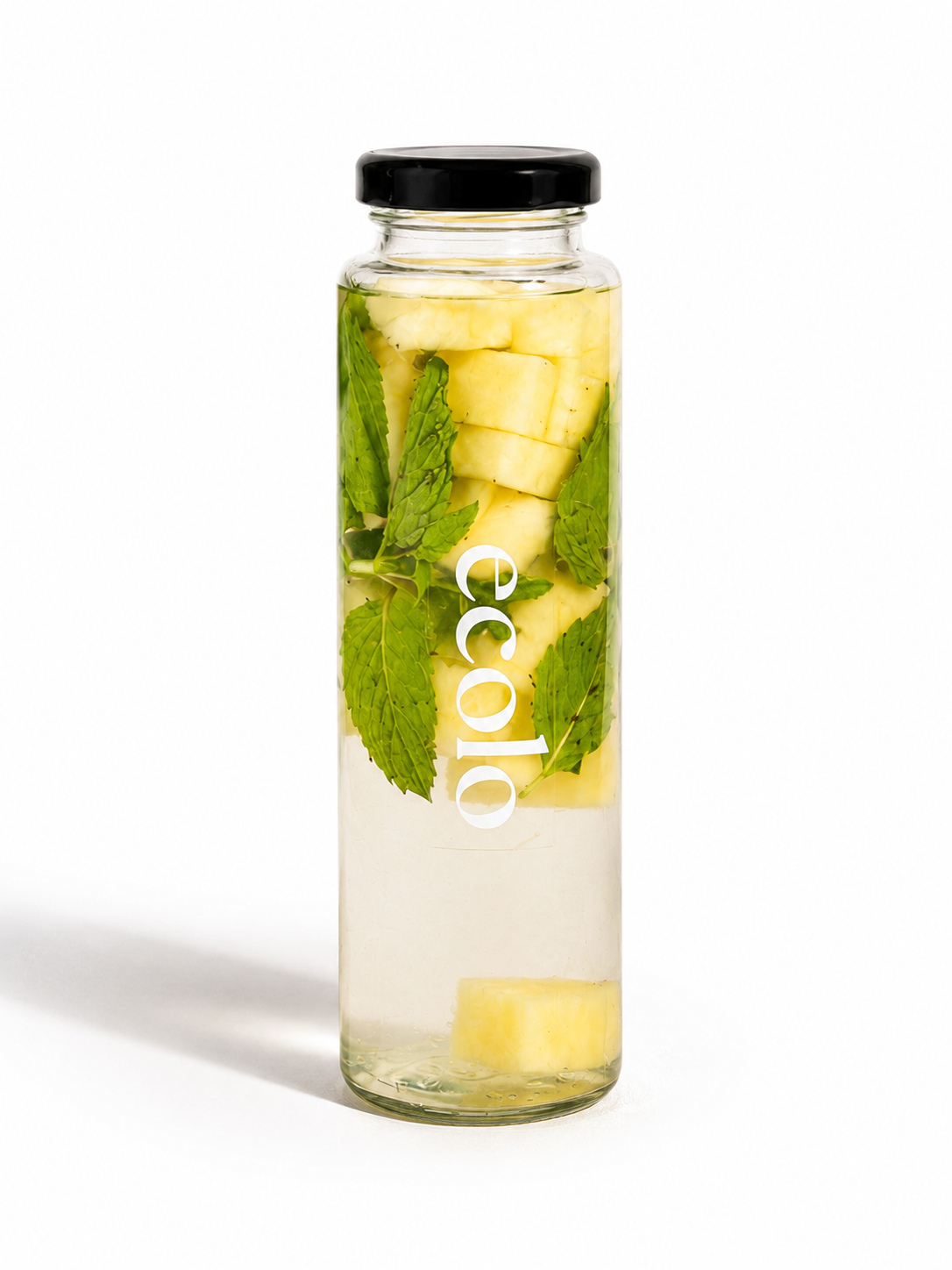
- Blended into a drink — pairs naturally with mint, lime, or coconut water
- Straight after a protein-heavy meal — the traditional way it's used across tropical cuisines
This is exactly why pineapple is one of the core fruits across our tropical blends at Ecolo — it brings real digestive and anti-inflammatory value, not just sweetness, alongside mint and cucumber in our lighter drinks.
Frequently asked questions
What is bromelain and why is it in pineapple?
Bromelain is a mix of protein-digesting enzymes found mainly in the stem and fruit of pineapple. It helps break down proteins into smaller pieces the body absorbs more easily, and it's been studied for anti-inflammatory effects too.
Is fresh pineapple better than tinned or juiced pineapple?
Yes, for bromelain specifically. Heat processing used in canning and most packaged juice breaks down bromelain, so fresh or lightly processed pineapple retains meaningfully more of the active enzyme.
Can pineapple help with bloating or a heavy meal?
Pineapple's bromelain aids protein digestion and its fibre supports regular movement through the gut, which is why it's a common choice after protein-heavy or rich meals.
This article is for general information and isn't medical advice. If you have a specific health condition or take medication, check with a doctor or dietitian before making major changes to your diet.